Pepe Moya
Los pacientes del doctor GarcíaPepe Moya, whose full name is José Moya Aguilera, first enters the story at the edge of death in the courtyard of the Hospital de Sangre de Aravaca. Guillermo García Medina chooses him from among the dying soldiers and transfuses him twice; that rescue becomes the origin of a durable bond. Pepe turns gratitude into a debt he intends to repay, and his unexpected return to the hospital eventually pulls Guillermo away from the operating room to face an emergency whose details Pepe cannot disclose.
Identity and First Encounter
Pepe is a soldier from Torreperogil, a village in Jaén, who has come to defend Madrid. Guillermo notices him among the gravely wounded because he is young, with sun-lightened strands in his brown hair, and wears an olive twig like an insignia in the buttonhole of his jacket. The twig and the details of his face make him distinct to Guillermo amid the line of dying men.
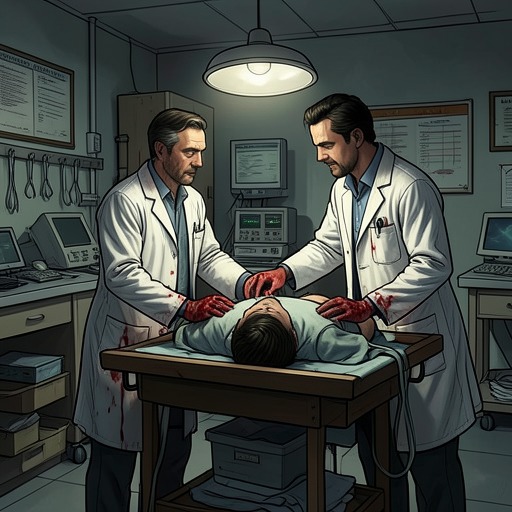
The first bottle of blood has little effect. As Guillermo administers a second transfusion, Pepe opens his eyes and lips. Guillermo remembers his brown eyes with golden reflections and, especially, a front tooth broken diagonally. The sight of the revived soldier brings Guillermo an unfamiliar, forceful euphoria; he laughs with a joy so intense that he cannot explain it when Pepe asks what has happened. His response makes the rescue more than a clinical success: it becomes a moment that stays with him more strongly than the other lives he helps save that day.
Gratitude Made Tangible
Norman Bethune gives the moment a solemn, fleeting benediction, telling Guillermo, in French, that Pepe is now a god too. By the time the team returns to Madrid, they have saved sixteen men, five through Guillermo’s work. Yet Pepe remains the one who most impresses him. Before leaving, Guillermo hears Pepe describe the belief that a person saved from death owes a lasting debt to the one who saved him. Pepe offers his help, however uncertainly, if Guillermo should ever need anything.
Pepe insists that Guillermo remember his name and village before they part. Less than a week later, he returns to the hospital carrying a copy of El Heraldo de Madrid. Its front-page photograph shows Pepe and Guillermo together beneath a prominent headline presenting Guillermo as the Spanish Bethune. Pepe explains that he would have brought olive oil from his village, where it is made especially well, but instead has brought the newspaper because he thought Guillermo would like it. Guillermo thanks him and embraces him, despite already having several copies in his desk drawer. The gift matters not for its rarity but as Pepe’s chosen way of making his promise visible.
Afterward, Pepe visits from time to time, almost never empty-handed. He brings small provisions such as apples, cigarettes, or a tin of Russian meat—goods difficult enough for him to obtain that Guillermo tries to stop him from spending so much effort. Pepe continues to behave as though the person he rescued must be cared for in return. His visits turn the abstract language of a permanent debt into repeated acts of attention, while Guillermo recognizes that gratitude is only one consequence of his work at Aravaca.
From Rescuer to Colleague
The newspaper photograph also has consequences beyond Pepe’s friendship with Guillermo. Its publicity weakens the hospital leadership’s resistance to Guillermo’s growing responsibilities, and the director eventually yields to pressure from Dr. Quintanilla. On January 11, Bethune comes to Hospital de San Carlos to say goodbye before taking his team to other fronts. He asks Guillermo to take charge of the mobile service, which will continue operating with Spanish staff.
Bethune’s departure and Guillermo’s new role place Pepe’s private act of gratitude against the expanding public work that follows the rescue. Guillermo soon forms six mobile units while continuing his hospital post; when they begin visiting the fronts around Madrid, Quintanilla appoints him head of the transfusion service established at San Carlos with a Canadian donation of a refrigerator. The advance publicity has given Guillermo a prominence he considers undeserved, but the practical service grows out of the work he has learned to do. Pepe’s gift and visits belong to the intimate aftermath; the photograph helps set in motion a much larger institutional consequence.
The Urgent Return
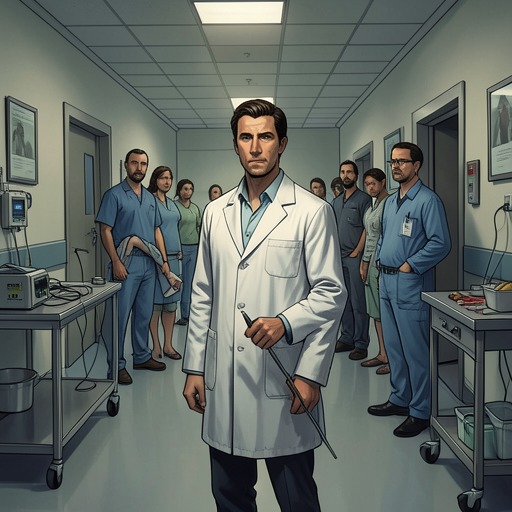
By early November, Bethune is no longer in Spain. An incident in the operating theatre interrupts Guillermo’s work: a nurse reports that a soldier named Pepe is demanding to see him and has insisted that the matter is a military priority. The familiar name changes the character of the interruption. Pepe is no longer simply the patient Guillermo once saved; he is now the person who comes to summon the doctor.
Guillermo is amused when a patient suggests choosing his own surgeon, but when he leaves the operating room and sees Pepe, the expression on Pepe’s face stops him in the middle of a laugh. Pepe takes his arm and speaks in a whisper. He says that there is an emergency, that he cannot explain it, and that he knows no other doctor. He has brought Guillermo’s coat, tells him to take off his surgical gown and put it on, and urges him to leave immediately. Before they go, Pepe tells him to take some of the bottles Guillermo calls miraculous because they will need them.
The scene reverses the first encounter without erasing it. At Aravaca, Pepe lay helpless among the dying while Guillermo chose him and supplied the blood that brought him back. Here Pepe arrives with a purpose, clothes for the journey, and a request for the medical supplies needed for a crisis. He still depends on Guillermo’s skill, but his own initiative gives the rescuer a reason to leave the safety and routine of the hospital. The emergency remains undisclosed at this point, so Pepe’s role rests on what the scene makes clear: he comes in person, trusts no other doctor, and acts with enough urgency to turn an old promise into present action.
Narrative Significance
Pepe’s appearances give a concrete form to the story’s motif of the debt owed to someone who saves a life. He states that debt, then enacts it in newspaper, food, repeated visits, and finally the abrupt summons. The gestures are small beside the scale of the war, but their accumulation gives the relationship its force: what began with Guillermo’s decision to save a single soldier becomes a connection that alters the doctor’s work and eventually draws him into another danger.
The first transfusion is also an origin point for Guillermo’s professional trajectory. His own five successful transfusions among the sixteen men saved by Bethune’s team precede the mobile units and the transfusion service at San Carlos. Pepe is not the sole cause of these developments, but his survival becomes inseparable from Guillermo’s memory of the work and from the publicity that helps secure institutional support. The episode joins bodily experience, public reputation, and personal obligation without making them identical: Guillermo regards the headline’s praise as excessive, while the friendship formed beneath it remains deeply consequential.
Pepe’s final appearance in this evidence leaves the immediate emergency unresolved. Its importance lies in the changed terms of their relation: the dying soldier has become the messenger who interrupts surgery, brings a coat, and sends his rescuer out with bottles of blood. Gratitude no longer points only backward to the moment of rescue; it has become a form of reciprocal trust, tested by an urgent request that Guillermo accepts before he knows what awaits them.